
The Marketer Who Realized He Was Already a Coach
By Anna Broome
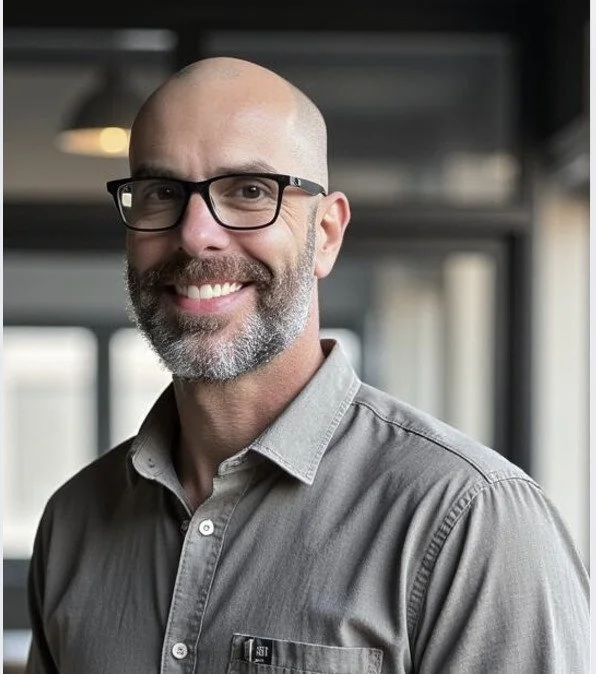
Jeff Donaldson spent 30 years in marketing. He worked with brands like Coors and Crocs. He sat in boardrooms, shaped positioning strategies, and helped companies figure out how to grow. But somewhere along the way, he noticed a pattern. The work that made the most difference wasn't happening in the campaigns. It was happening in the leadership conversations.
Companies would invest heavily in strategy and branding, then quietly stall because the people at the top weren't aligned. Jeff kept finding himself inside those conversations—not because he was asked to, but because that's where the real problem lived.
A close friend who was already a Scaling Up coach saw what Jeff couldn't yet name. "He saw my potential," Jeff says, "and pushed me to make the change." Today, Jeff runs a coaching practice focused on founders and leadership teams in the $10M–$50M range: the companies where growth has outpaced the system, and the CEO is still holding everything together through sheer force of will.
From Marketing Executive to Leadership Coach
Jeff wasn't looking for a second act when he made the shift to coaching. He was already doing the work—he just hadn't named it that way yet. Decades of working alongside CEOs and founders had given him something that most marketing professionals don't develop: the ability to read a leadership team and say out loud what wasn't connecting.
"I wasn't known for campaigns or tactics," he says. "I was known for seeing where things weren't lining up and being willing to say it, even when it wasn't what people expected from someone in a marketing role."
That directness, combined with 30 years of experience in branding, consumer behavior, positioning, and technology, became the foundation of his coaching practice. The transition wasn't a reinvention. It was a recognition of what he'd already built.
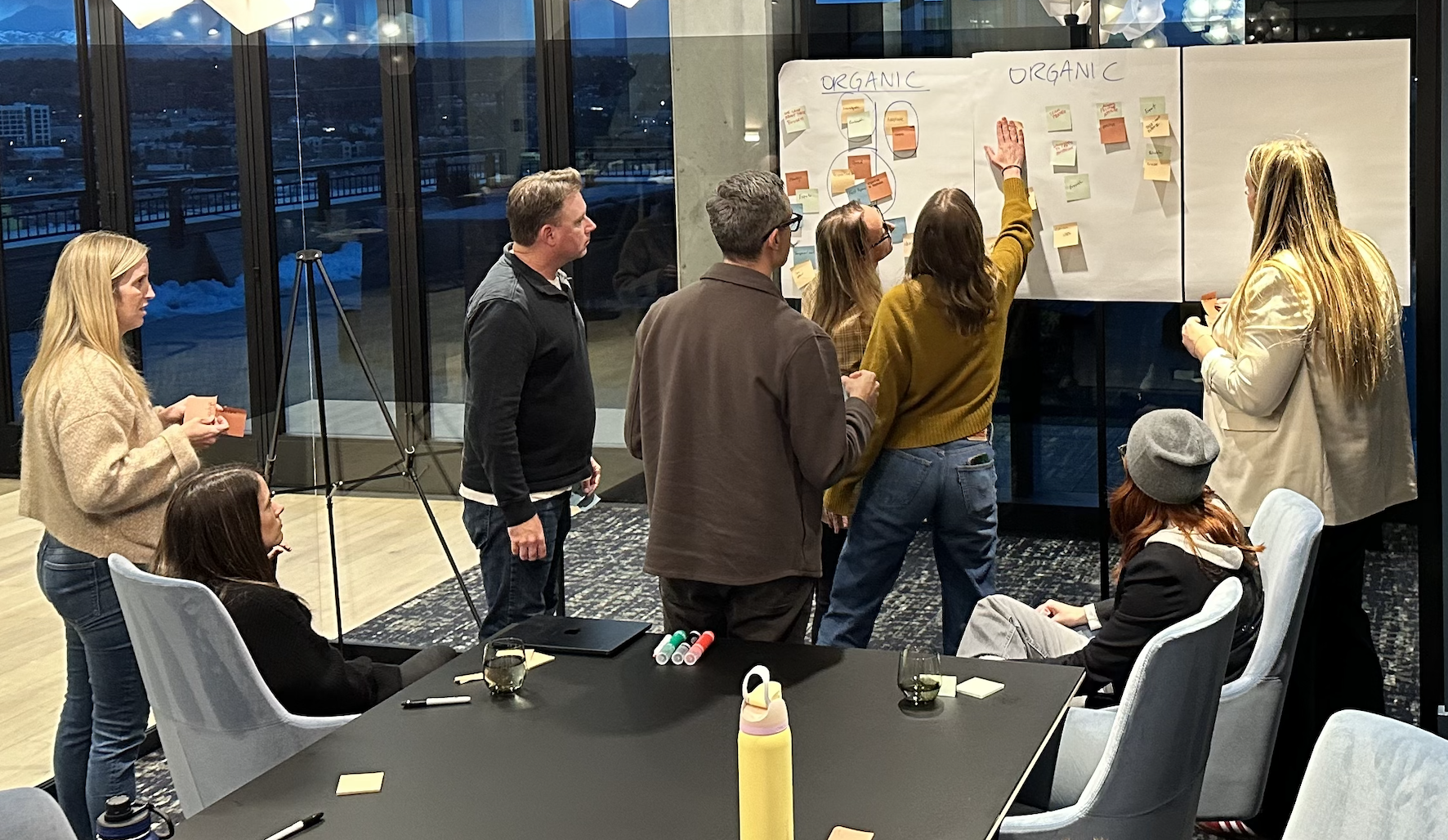
Why the Scaling Up Performance Platform
Jeff evaluated multiple options before committing to Scaling Up. What won him over wasn't a single feature: it was the philosophy behind it.
"I liked the flexibility of the Scaling Up Performance Platform compared to other options," he says. "The companies are the focus, and we adapt the tools to fit, rather than forcing an unchangeable process onto clients."
That distinction matters to Jeff because he's seen what happens when a framework becomes the point rather than the means. The best methodology is the one the team actually uses. Scaling Up, built around the Four Decisions™—People, Strategy, Execution, and Cash—gives coaches a rigorous structure without turning the structure into a cage.
"It forces clarity around people, strategy, execution, and cash," Jeff explains, "but more importantly it exposes where those things aren't actually connected. That's where most of the problems sit."
The platform's track record inside 80,000+ real companies gave him the credibility foundation to go into engagements with confidence. He wasn't selling a theory. He was bringing a system with decades of proof behind it.
The Problem He Keeps Solving
Jeff works with founder-led companies that have hit a specific wall. Revenue is growing. The business has scale. But the CEO is still the bottleneck, still carrying the context, still the one every major decision runs through.
"The founder is trying to hand off decision ownership but doesn't know how, so the team can't evolve," he says. "That misalignment keeps the founder as the bottleneck and makes the business harder and harder to run."
What looks like a communication problem, or an accountability problem, is usually something deeper: a lack of shared assumptions about what matters most and how tradeoffs get made. Once that becomes visible, Jeff says, alignment doesn't have to be forced. "It tightens on its own because the team can finally see the same thing."
Jeff also brings a dimension to his practice that most business coaches don't: a serious integration of founder mental health. "I'm a big proponent of the mental health of entrepreneurs," he says. "It's critical to the success of the business, and most leaders I meet haven't had any practice at working on themselves that way."
$600,000 Already Sitting in the Business
One of Jeff's most striking client engagements started with a manufacturing company that had done everything right—or so it appeared. They'd doubled revenue in 18 months. But their margins had collapsed by 50%. They were, in Jeff's words, growing broke.
Before setting growth priorities, Jeff dug into the financials. What he found was $600,000 in profit that was already inside the business, just not being captured. Pricing misalignment. Unrecovered freight costs. Slow accounts receivable. Bloated inventory. Uncontrolled discounts. And operating costs that had never been cleaned up.
"Finding that $600,000 wasn't the hard part," Jeff says. "A good CFO can do that kind of analysis. The hard part is actually capturing it, and that's a completely different problem."
Every financial leak had a leadership problem underneath it. Pricing was broken because the team wasn't aligned on what the products were worth. AR was high because finance and operations weren't talking to each other. Discounts were out of control because no one had given salespeople clear authority. And inventory was bloated because there was no cross-functional planning.
Jeff ran what he calls a Profit Opportunity Audit: identifying the financial leaks, then coaching the leadership team on the alignment issues that created them. "I hold everyone accountable to actually capture it," he says. "That's the part that's different from just doing the analysis."
Jeff has since found that companies in the $10M–$50M range typically have $200,000–$400,000 sitting in their businesses, uncaptured. The audit is now a standard entry point into his engagements.
Building Programs for CEOs Who Are Tired of Solving Problems Alone
The work Jeff is most proud of didn't come from a single engagement. It came from a pattern he kept seeing across clients: capable CEOs making good decisions, but making them in isolation.
"Around 78% of CEOs say they feel isolated in the role," Jeff notes. "And you can see the effect of that in how decisions get made and how much weight sits on one person."
That insight led Jeff to build two group coaching programs.
Scale Ready is designed for earlier-stage CEOs growing toward the next level. It combines the Scaling Up Performance Platform with a peer group of founders at a similar stage, so execution stops being theoretical. "When a CEO sets priorities or works through team accountability, they're doing it alongside others facing the same constraints," Jeff explains. "That tightens thinking quickly."
Capital Ready addresses a different version of the same problem: CEOs making high-stakes decisions about growth and capital without a clear connection to long-term enterprise value. The program works through mindset, value creation, investor strategy, and execution, so capital becomes part of how the company is built, not just something raised when needed.
In both cases, the shift is similar. The CEO is no longer solving everything alone. And the quality of their decisions improves because their thinking is being pressure-tested by people who understand what's actually at stake.
What He Knows Now That He Didn't Then
Jeff is candid about what surprised him in the transition from corporate to coaching. The hardest skill to develop wasn't strategic: it was learning to stay in tension without resolving it too quickly.
"It's easy to move to solutions," he says. "It's harder to stay with what's actually causing the issue long enough for the team to see it clearly."
He's also been shaped by the Scaling Up certified coach community in ways he didn't expect. The access to other coaches working at a high level has exposed blind spots and sharpened his thinking in ways that solo practice couldn't.
And his marketing background—the thing he worried about shedding when he made the transition—turned out to be one of his biggest differentiators. "I've been able to incorporate 30 years of marketing, positioning, consumer behavior, and technology," he says. "Looking back, I wish I had made that shift sooner."
For Those Considering the Path
Jeff's message to experienced leaders who are weighing coaching as a next chapter is straightforward: the question isn't whether you have what it takes. It's whether you're willing to let go of being the person with the answers.
"The work is about holding the space where better thinking happens," he says. "That's different from what most executives are trained to do, but it's also what makes it more rewarding."
He's particularly clear-eyed about the value of coaching in uncertain times. CEOs are navigating conditions that feel less like executing a plan and more, in his words, like "driving at night with one headlight."
"Having a coach doesn't remove that uncertainty. But it does change how a CEO navigates through it. What a coach really does is bring more light to the situation: not by giving answers, but by helping to see the patterns, risks, and tradeoffs earlier than they would on their own."
Most of the damage in a business, Jeff says, doesn't come from obvious problems. It comes from things that weren't seen clearly or early enough. That's why the work matters; and why, after 30 years of doing it informally, he finally made it official.
If you're an experienced executive or business leader considering certification as a Scaling Up Certified Coach, visit certification.scalingup.com to learn more about the program and download the official Coach Certification Guide.